
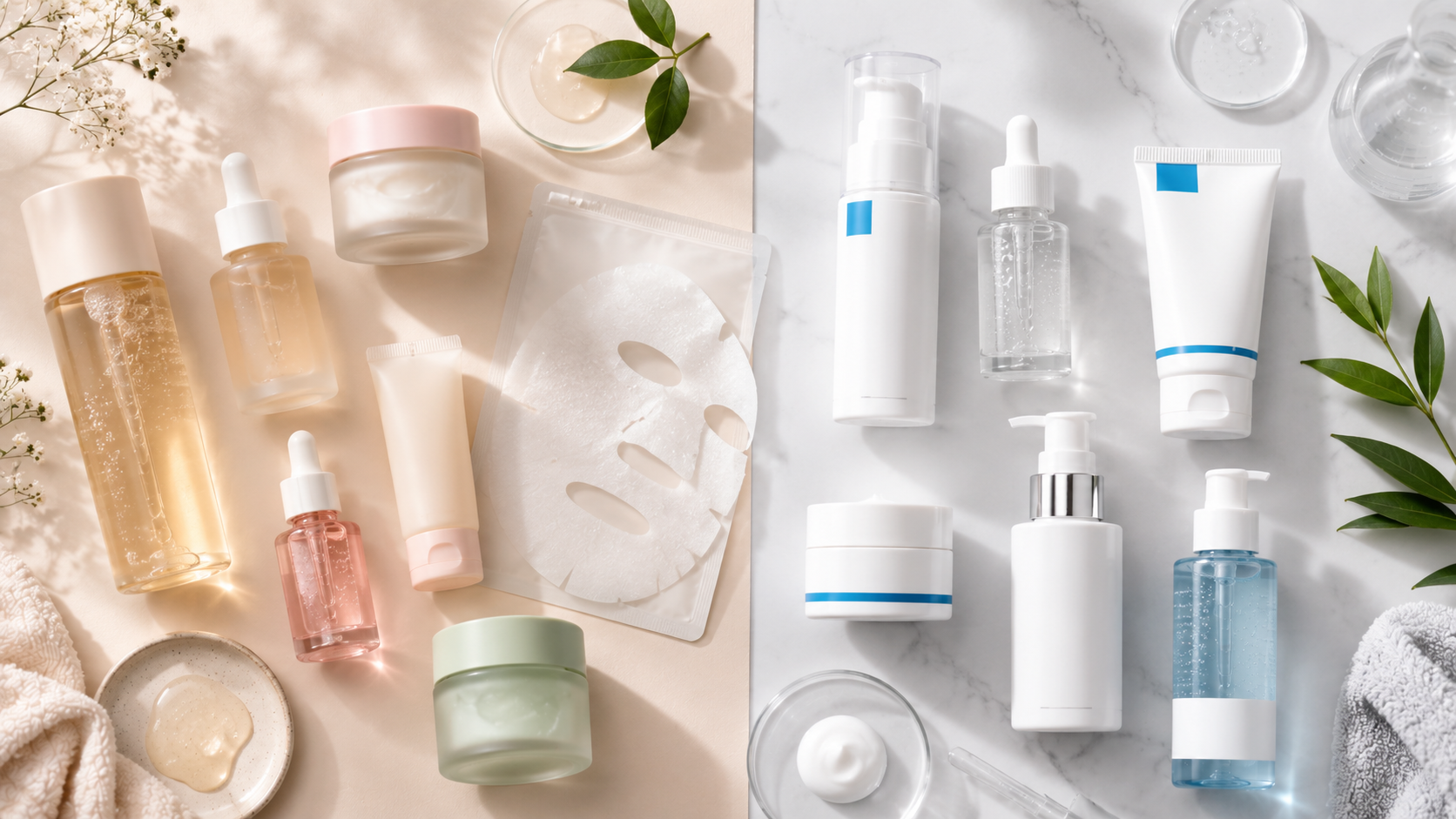
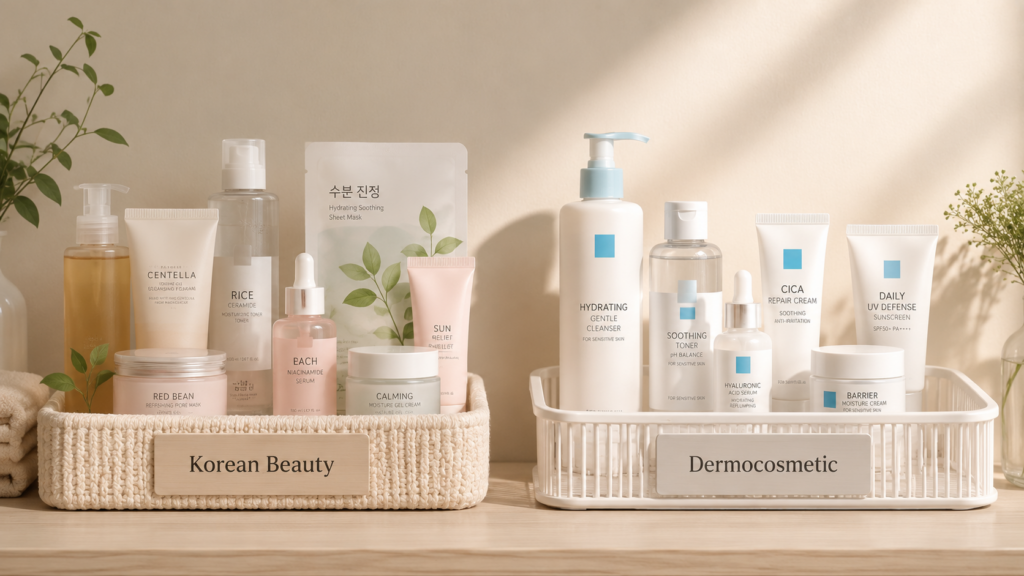
Browse our shop and you’ll notice two sections sitting side by side: Korean Beauty and Dermocosmetic. Both promise great skin. Both are full of serums, essences, and creams. So why are they separated at all and which one should you actually be buying from?
The two approaches aren’t competitors. They come from different philosophies about what skincare is for, and understanding the difference will help you shop with intention instead of guessing.
What Dermocosmetic Skincare Actually Means In Korean Beauty
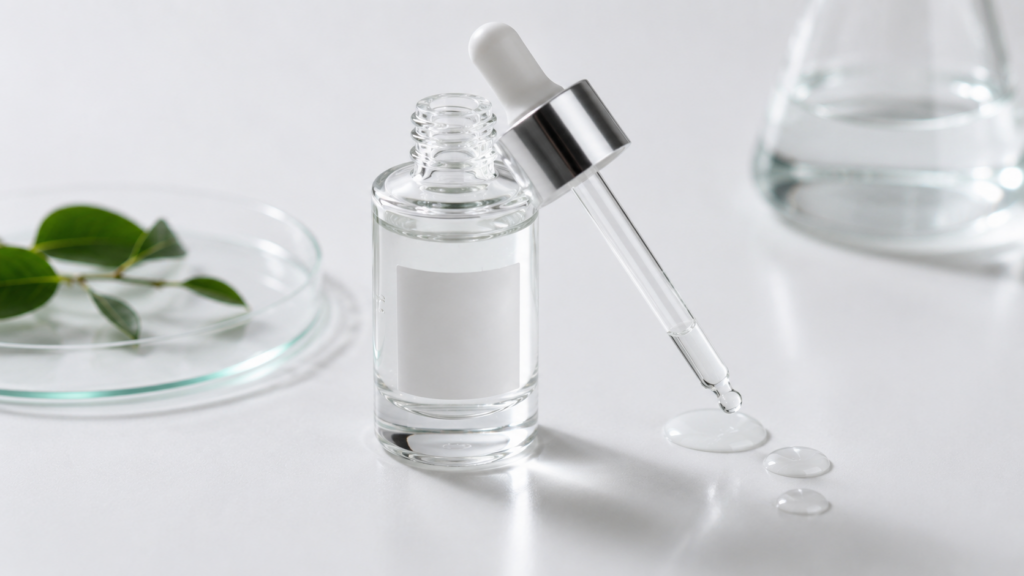
Dermocosmetic products sit between cosmetics and pharmaceuticals. They’re developed with clinical rigor, often formulated alongside dermatologists, and built around one job: correcting a specific skin concern.
Characteristics of dermocosmetic products:
- Higher concentrations of active ingredients (retinoids, hydroquinone alternatives, azelaic acid, clinical-strength vitamin C)
- Backed by research and often recommended as part of a treatment plan, sometimes alongside in-clinic procedures
- Formulated with efficacy as the priority not texture, scent, or “self-care ritual” appeal
- Best suited for treating a diagnosed or clearly identified concern: acne, melasma, post-inflammatory hyperpigmentation, visible aging
Think of dermocosmetic products as the ones you reach for when you have a specific problem you’re actively trying to solve.
What Korean Beauty (K-Beauty) Is Built Around
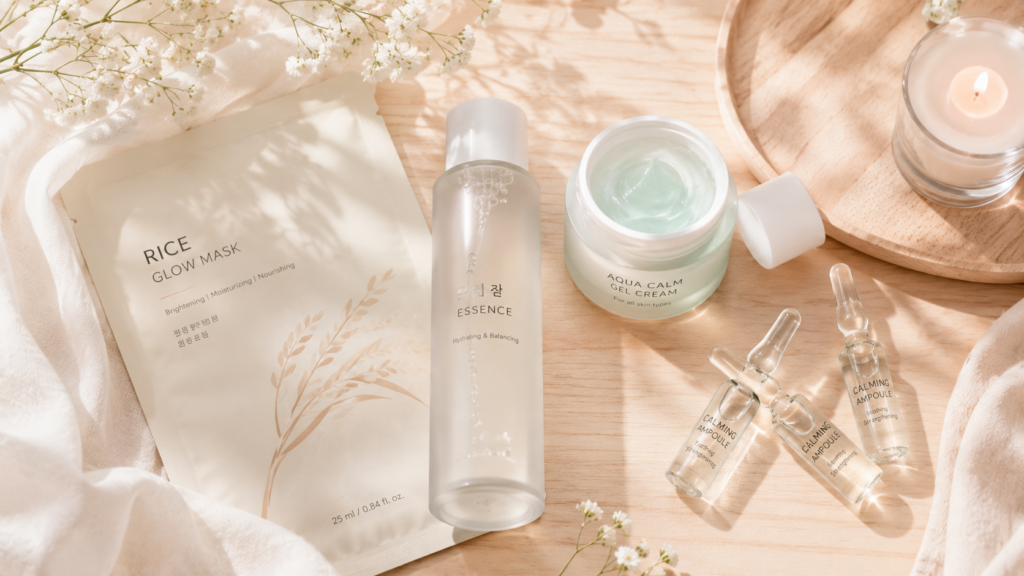
K-Beauty comes from a completely different starting point: skin health as an ongoing ritual, not a response to a problem. It’s built on the idea of prevention and long-term maintenance rather than correction.
Characteristics of K-Beauty products:
- Multi-step routines (cleansing oil, cleanser, toner, essence, serum, moisturizer)
- Emphasis on hydration, barrier support, and gentle, gradual results
- Innovative, lightweight textures essences, ampoules, sheet masks, gel creams
- Gentler concentrations designed for daily, long-term layering rather than short-term correction
Think of K-Beauty as the routine you build to keep skin healthy and glowing over time before problems start, or alongside treating one.
The Core Difference, Side by Side In Korean Beauty
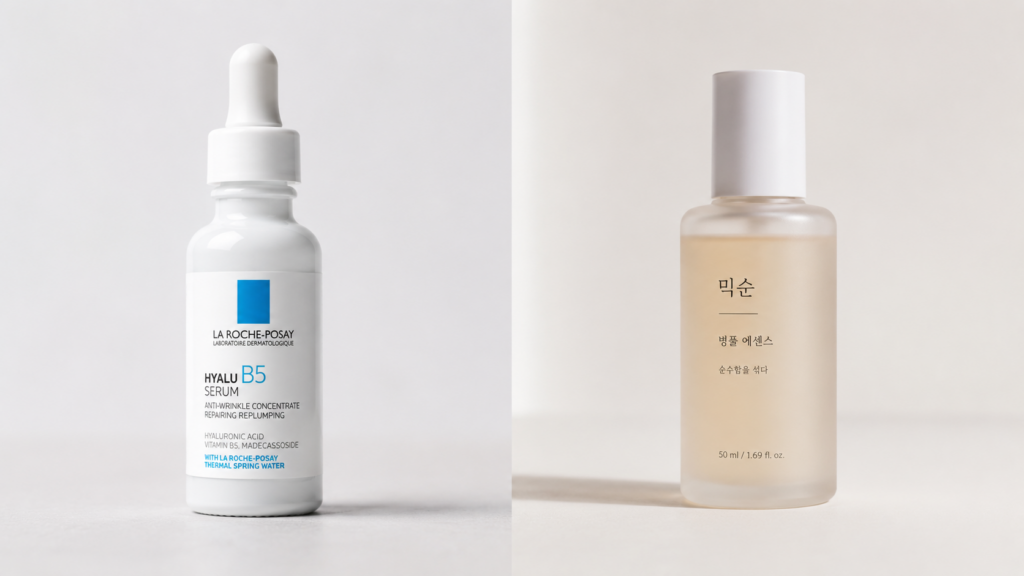
| Dermocosmetic | Korean Beauty | |
| Approach | Clinical, corrective | Preventative, ritual-based |
| Best for | A specific diagnosed concern | Long-term skin health and glow |
| Active concentration | Higher, targeted | Gentler, layered |
| Timeline | Structured treatment period | Ongoing daily habit |
So Which One Do You Actually Need?
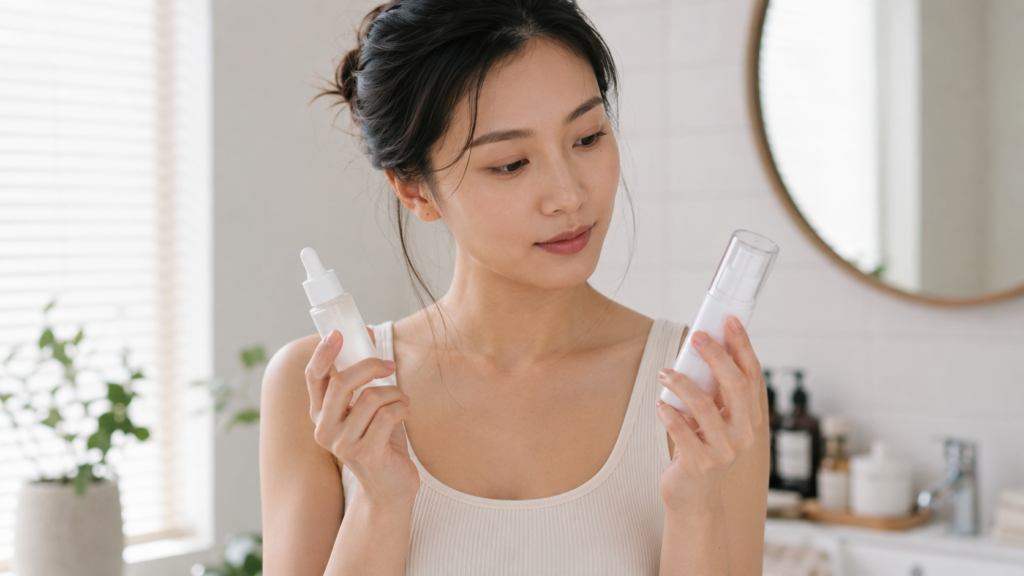
- If you have an active concern acne, melasma, stubborn dark spots, visible sun damage start with dermocosmetic products, ideally guided by a consultation so the actives are matched correctly to your skin and concern.
- If your skin is generally healthy and you want to maintain it, prevent future issues, and enjoy the process K-Beauty is an excellent long-term foundation.
- Most people benefit from both. A common, effective approach is using K-Beauty as your everyday hydration and maintenance routine, with dermocosmetic actives layered in for the specific concern you’re treating.
How to Combine Both Without Overwhelming Your Skin
- Don’t introduce a new dermocosmetic active and a new multi-step K-Beauty routine in the same week your skin can’t tell you which one caused a reaction.
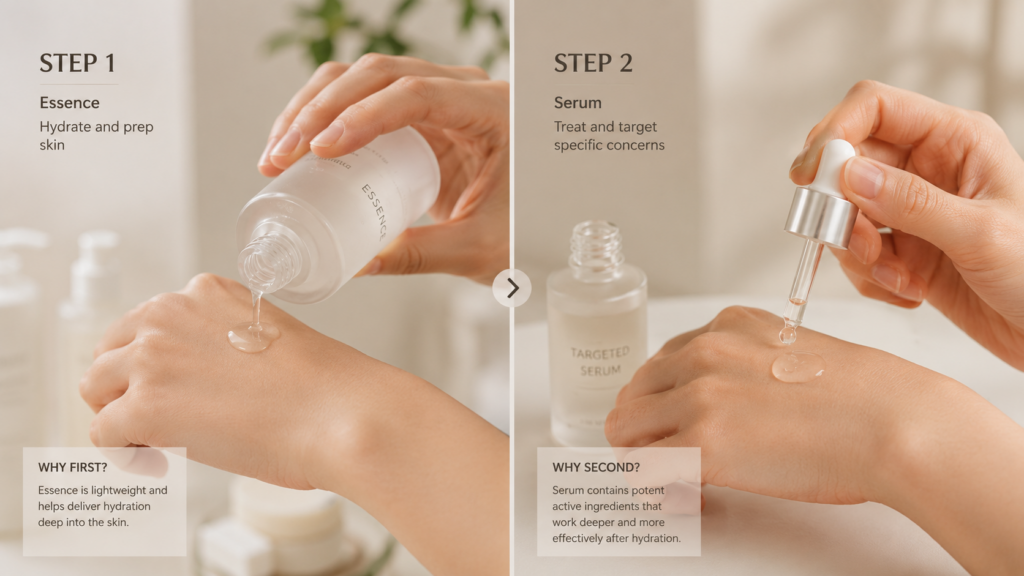
- Use K-Beauty steps (hydrating toner, essence, moisturizer) to support skin while a dermocosmetic active does the corrective work this often reduces irritation from strong actives like retinol.
- Let concentration guide the order: gentler K-Beauty layers first, treatment-strength dermocosmetic actives applied with intention (often at night), sunscreen non-negotiable the next morning.
Frequently Asked Questions
Is dermocosmetic skincare only available with a prescription? Not always many dermocosmetic products are available over the counter, but they’re formulated at concentrations that work best when guided by a professional, especially for concerns like melasma or cystic acne.
Can K-Beauty products treat acne or dark spots? Some can help support the process (hydration, gentle exfoliation), but they’re generally not concentrated enough to be the primary treatment for a diagnosed skin concern.
Do I need to pick one category and stick with it? No the two work well together. The key is introducing new products one at a time so you can track what’s actually working.
Not sure where to start? Book a consultation and we’ll help you build the right mix of dermocosmetic and Korean beauty products for your specific skin. Browse our curated Dermocosmetic and Korean Beauty collections to get started.