

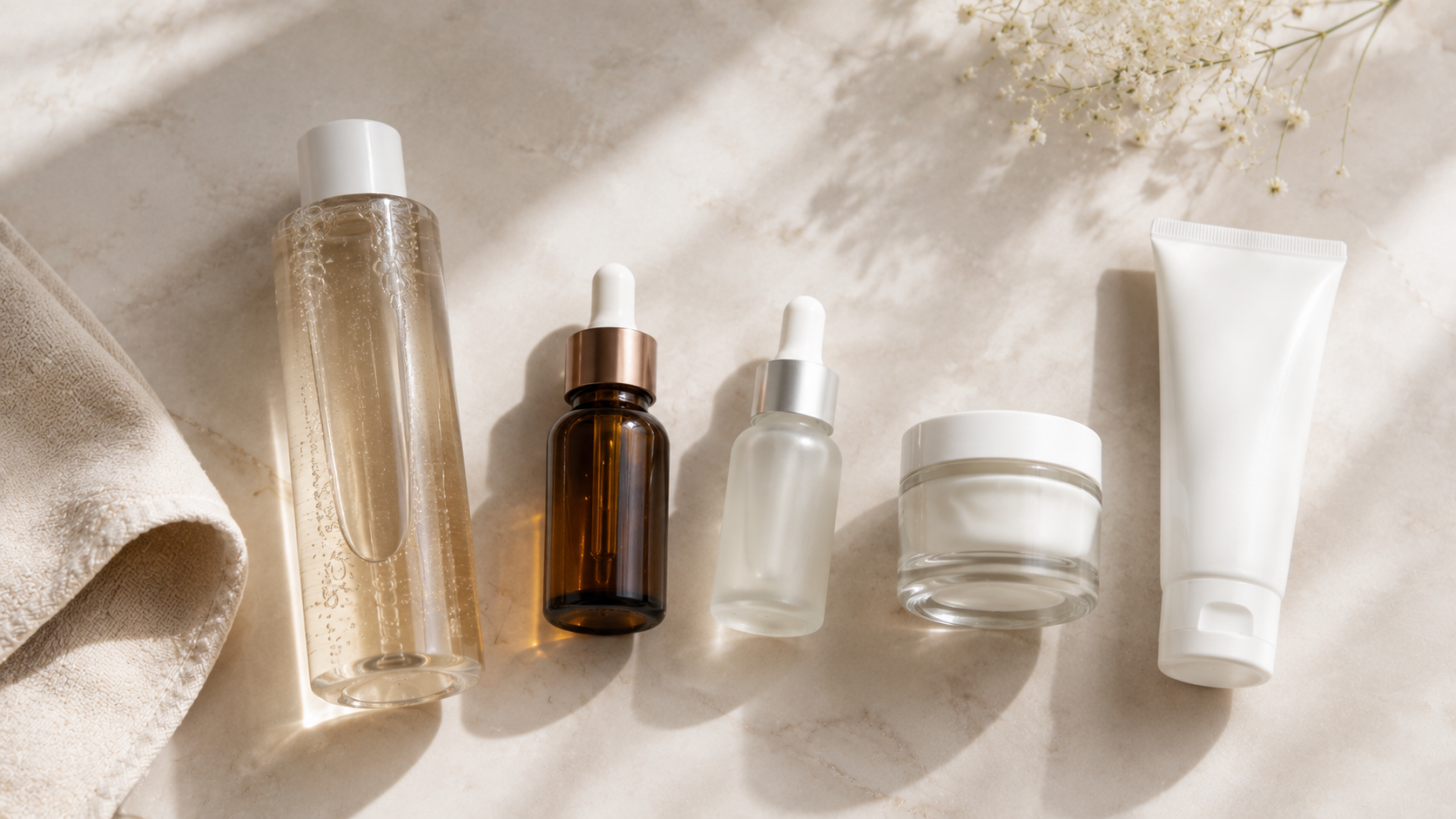
You can own every serum, cream, and treatment recommended by every dermatologist and influencer combined and still not see results, simply because of the order you apply them in. Skincare products are formulated to work in sequence. Get the order wrong, and you can block absorption, dilute active ingredients, or irritate your skin without meaning to.
Here’s the layering logic that actually works.
The General Rule: Thinnest to Thickest

The simplest way to remember skincare order is this: apply products from the thinnest, most watery texture to the thickest, most occlusive one. Thin formulas (like toners and serums) need direct contact with skin to absorb properly. Thicker products (like creams and oils) sit on top and seal everything in. Apply them in the wrong order, and the thin, active-rich products can’t penetrate they just sit on top of a moisturizer barrier instead.
There’s one exception to “thinnest to thickest”: sunscreen. It always goes last, no matter its texture, because its job is to sit on the surface and form a protective layer.
Morning Routine, Step by Step

- Cleanser — a gentle, non-stripping cleanser to remove overnight buildup without disrupting your skin barrier.
- Toner or essence — preps and balances skin, especially if you use one with hydrating or soothing ingredients.
- Antioxidant serum (e.g., Vitamin C) — apply on clean, slightly damp skin. Vitamin C in the morning helps defend against environmental stress and UV exposure throughout the day.
- Hydrating serum (e.g., Hyaluronic Acid) — layers on top to lock in moisture. Our Hyaluronic Acid Serum 3% works well here to plump and prep skin before moisturizer.
- Moisturizer — seals in the previous layers and reinforces your skin barrier.
- Sunscreen — always the final step, applied generously. This is the step most people shortchange, and it’s the one that protects everything you just did. Our SPF 50+ Sunscreen Cream Gel is designed to sit comfortably as this last layer without pilling.
Evening Routine, Step by Step
- Double cleanse (if wearing makeup or sunscreen) — an oil or balm cleanser first to break down makeup and SPF, followed by your regular gentle cleanser.
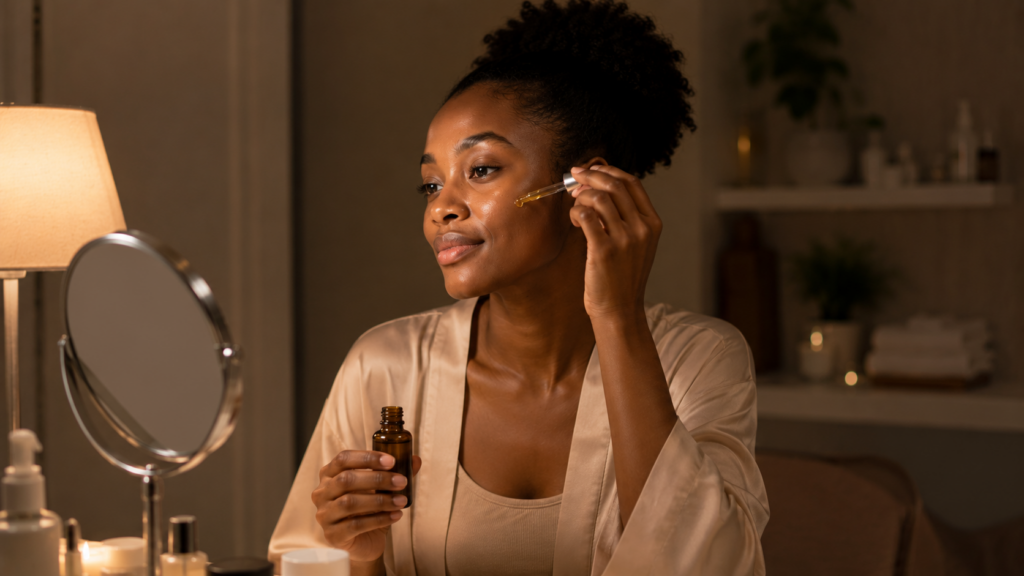
- Exfoliant or treatment (alternate nights) — this is when actives like retinol do their best work, since they can make skin more sun-sensitive during the day. Our Pro Series Retinol Serum is formulated with squalane to support smoother texture and firmer-looking skin overnight without excessive dryness.
- Hydrating or repair serum — replenish moisture, especially on nights you’ve used an active treatment.
- Moisturizer — often slightly richer at night than your morning formula, since there’s no need to layer under makeup or sunscreen.
- Facial oil (optional) — if used, this goes last as the heaviest, most occlusive layer to seal everything in overnight.
Common Layering Mistakes
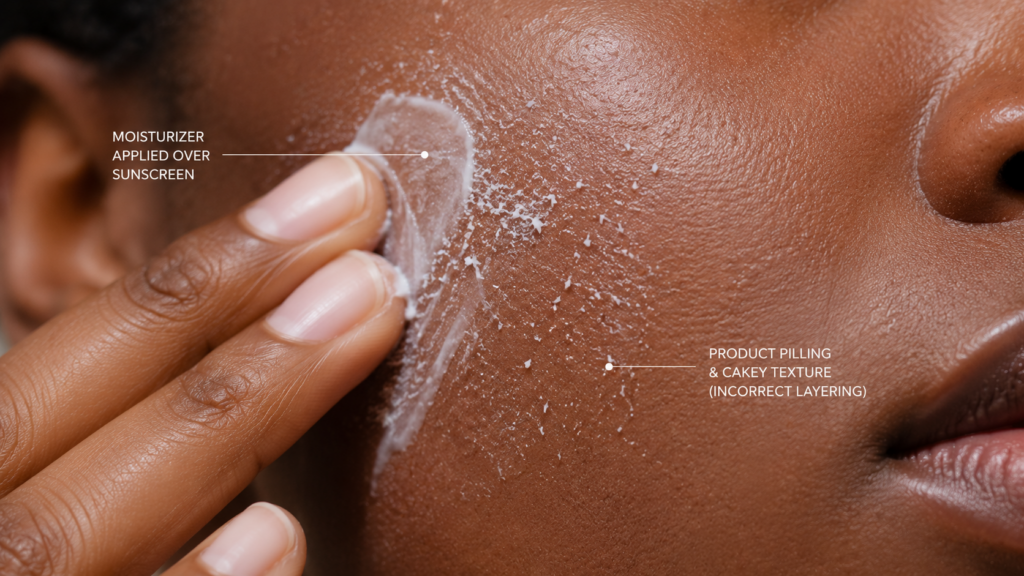
- Applying sunscreen before moisturizer. This dilutes the sunscreen and reduces how well it protects you. Moisturizer first, sunscreen last.
- Using Vitamin C and retinol in the same routine. Both are effective, but combining them can cause irritation for many skin types. It’s generally better to use Vitamin C in the morning and retinol at night.
- Introducing multiple new actives at once. If you’re adding retinol, exfoliating acids, and vitamin C all in the same week, it’s hard to tell what’s working and easy to over-irritate your skin. Introduce one active at a time, spaced a few weeks apart.
- Skipping moisturizer on oily skin. Even oily and acne-prone skin needs a lightweight moisturizer skipping it can trigger more oil production, not less.
How to Introduce New Actives Without Irritation

Start any new active retinol, an acid exfoliant, a new vitamin C concentration at 2–3 times per week, not daily. Watch how your skin responds over two weeks before increasing frequency. If you experience persistent redness, stinging, or peeling, scale back and let your barrier recover before trying again.
Frequently Asked Questions
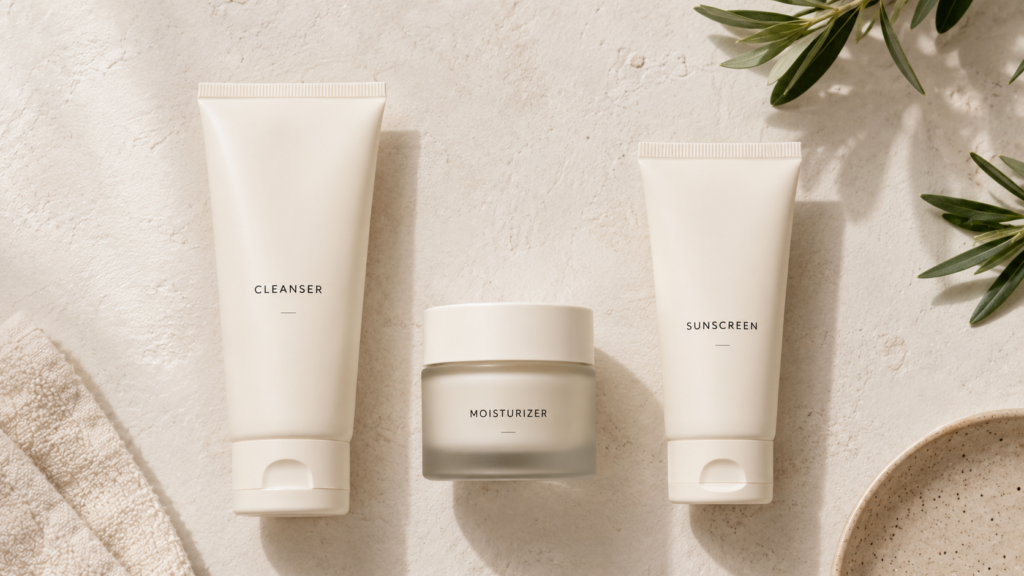
- Do I really need every single one of these steps? No, this is a full routine, not a minimum requirement. At its simplest, an effective routine is just: cleanser, moisturizer, and sunscreen (AM) / cleanser and moisturizer (PM). Serums and treatments are added based on your specific skin goals.
- Can I use retinol and hyaluronic acid together? Yes, they pair well. Hyaluronic acid helps offset the dryness that retinol can sometimes cause, so applying it just before your retinol (or mixed with it) is a common and effective combination.
- How long should I wait between applying each product? About 30–60 seconds is usually enough for a product to absorb before applying the next layer. You don’t need to wait several minutes between every step.

Not sure which products your skin actually needs? Book a one-on-one consultation and we’ll help you build a routine in the right order around your specific skin goals.