
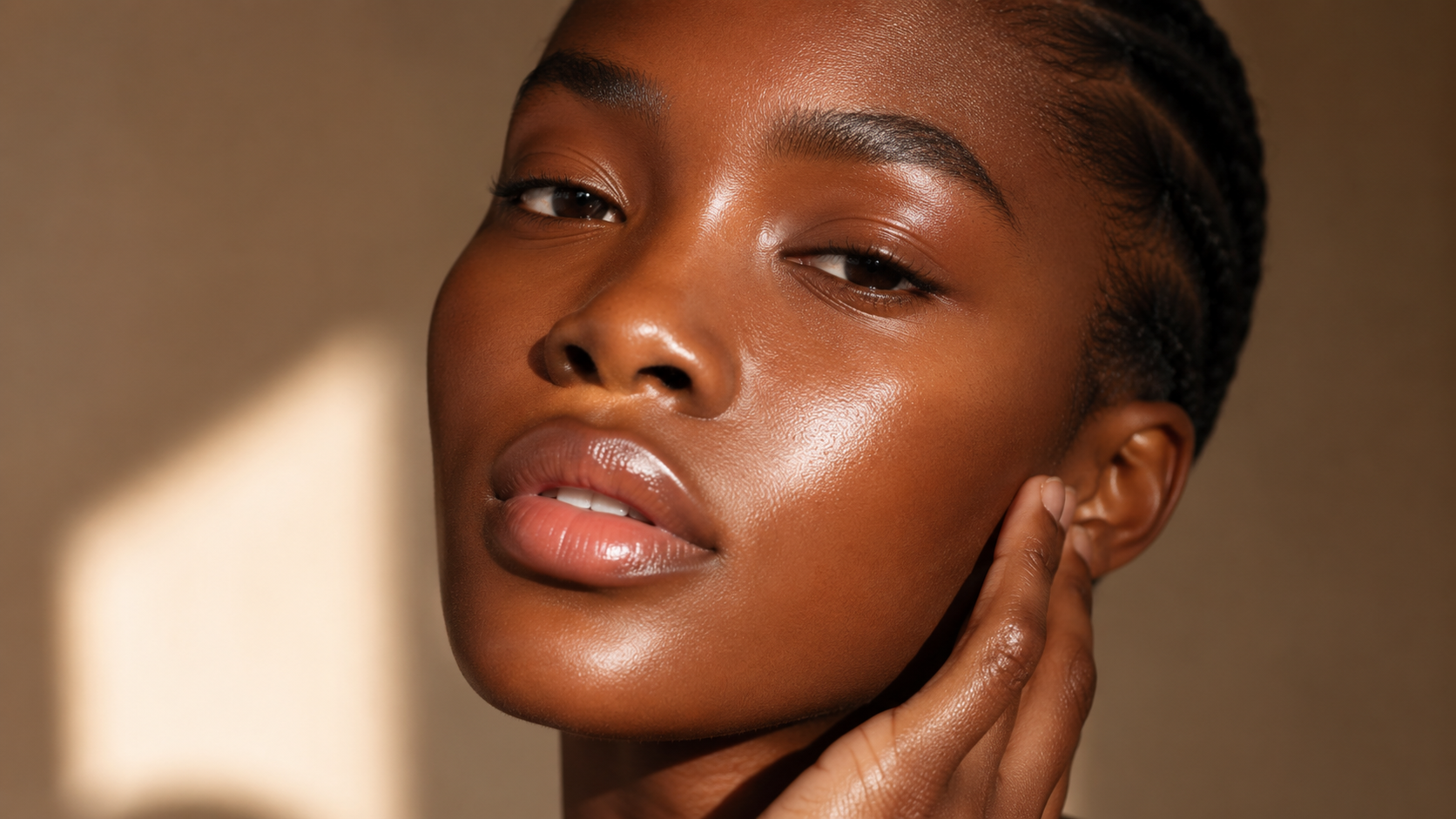
“Black don’t crack.” It’s a phrase you’ve probably heard your whole life and there’s truth behind it. Melanin does offer some natural protection against the sun. But that same phrase has quietly convinced generations of people with deeper skin tones that sunscreen is optional. Dermatologically, that’s one of the most costly skincare myths still in circulation.
What Melanin Actually Does — and Doesn’t Do

Melanin does absorb and scatter some UV radiation, which is why deeper skin tones tend to show fewer visible wrinkles at the same age compared to lighter skin. Research estimates that melanin gives skin the equivalent of roughly SPF 13 of natural protection.
That sounds like a lot until you compare it to the SPF 30–50 that dermatologists actually recommend. Natural melanin protection helps, but it is nowhere near enough to block the UV damage that happens with daily, unprotected sun exposure.
The Damage Still Happens, It Just Shows Up Differently
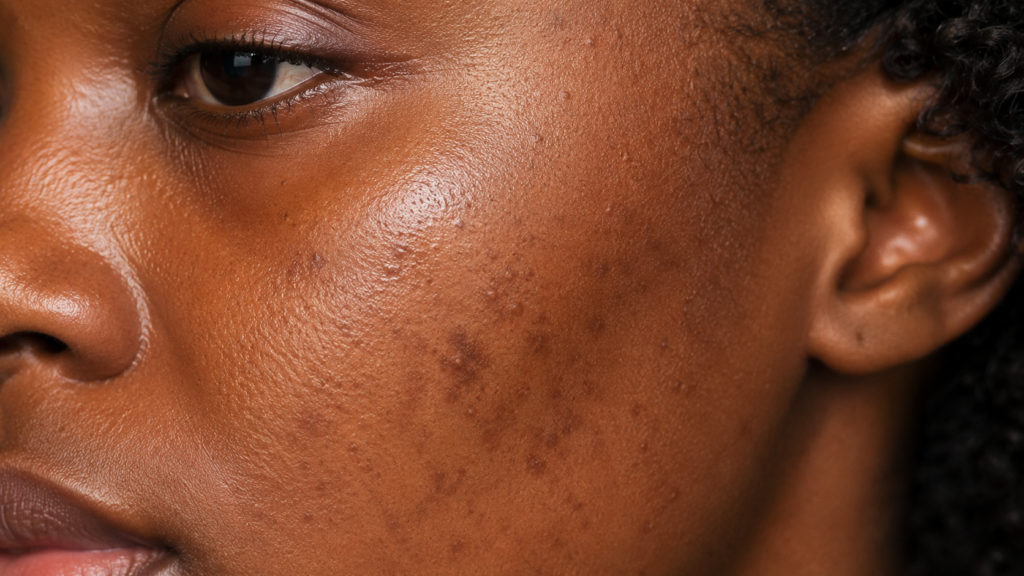
This is the part the myth misses entirely: UV damage on melanin-rich skin doesn’t always show up as wrinkles first. It shows up as:
- Hyperpigmentation and dark spots that deepen and spread with sun exposure
- Uneven skin tone, especially across the cheeks and forehead
- Melasma, a stubborn patchy pigmentation that’s made significantly worse by UV and heat
- Slower fading of acne marks (PIH), since UV directly stimulates more pigment production
- Long-term risk of skin cancer, which is often diagnosed later and more dangerously in people with deeper skin tones partly because of the assumption that sun protection “isn’t necessary”
In other words: the sun is still doing damage. It’s just showing up as tone and texture changes rather than the fine lines people usually associate with sun damage.
Why This Myth Persists
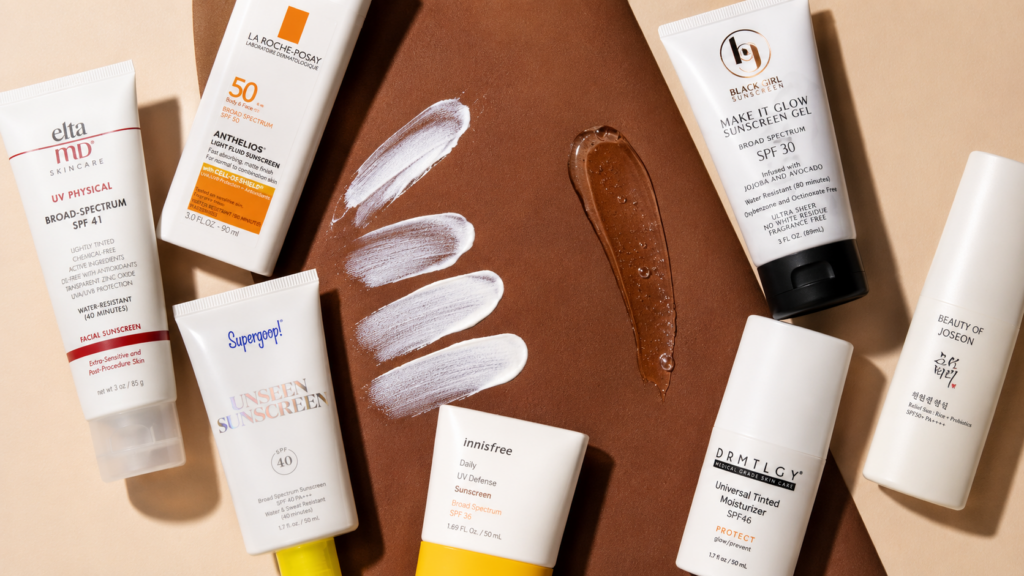
Part of it is cultural SPF marketing for decades centered lighter skin, and many mainstream sunscreens left a visible white or grey cast on deeper tones, making them genuinely unpleasant to wear. That’s a real, valid complaint it just doesn’t mean sunscreen itself should be skipped. It means the formula needs to be right.
Choosing a Sunscreen That Actually Works for Melanin-Rich Skin
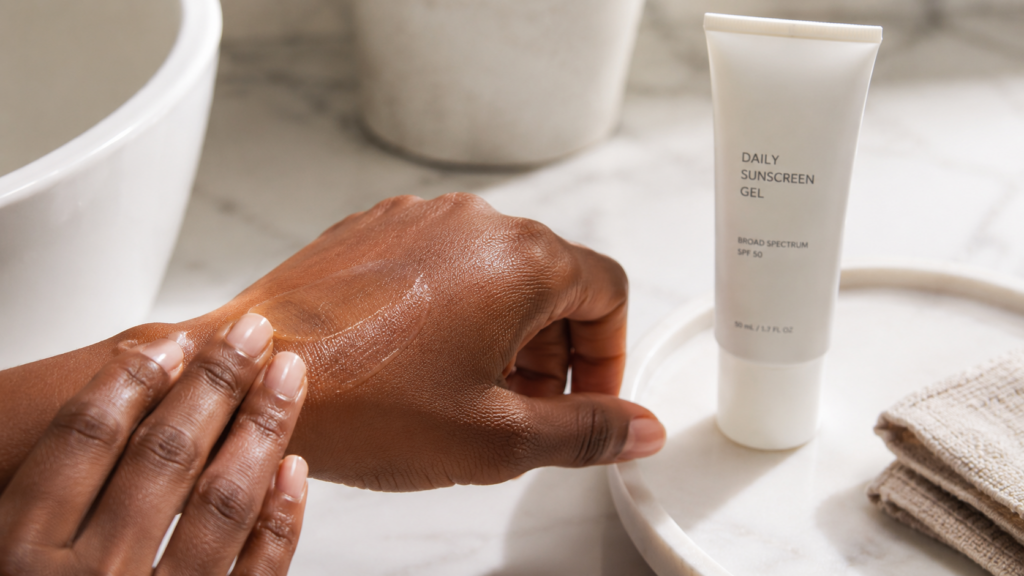
Look for:
- Broad-spectrum protection (UVA and UVB, not just one)
- SPF 30 minimum, SPF 50 for daily wear in high-UV climates like Lagos
- A gel or fluid texture, not a thick, chalky cream — this avoids the white cast and greasy finish that puts people off SPF
- Hydrating ingredients like hyaluronic acid, so sunscreen doubles as part of your moisture routine rather than fighting it
Our SPF 50+ Sunscreen Cream Gel was formulated specifically around these needs broad-spectrum protection with hyaluronic acid and kaolin for a non-greasy, no-white-cast finish that sits comfortably under makeup.
Tactical Guide: Building the Daily SPF Habit

Where does it sit in a routine? Always apply sunscreen as the absolute final step of your morning skincare regimen, after your moisturizer has dried down, but before you apply any base makeup or primers.
What is the correct dosage? To achieve the actual SPF protection listed on the bottle, you must apply a uniform layer. The universal clinical guideline is a nickel-sized pool or the “two-finger rule” (two neat lines of product drawn along your index and middle fingers) for the face and neck combined.
How often do I reapply? UV filters degrade under direct sunlight. If you are outdoors, swimming, or perspiring heavily, you must reapply your barrier every 2 to 3 hours to maintain structural protection.
Do I need it indoors or on rainy days? Absolutely. Standard window glass only filters out UVB rays; it allows deep-penetrating UVA rays the exact wavelengths responsible for hyperpigmentation and melasma to pass straight through. Similarly, up to 80% of UV radiation penetrates through dense cloud layers, meaning cloudy days require the exact same defense.
Frequently Asked Questions

If my skin never sunburns, do I genuinely still need sunscreen? Yes, without exception. Erythema (sunburning) is simply an acute surface inflammatory response to UVB rays. The deep cellular mutations, accelerated melanocyte triggering, pigment deepening, and long-term DNA damage caused by UVA rays occur silently without ever turning your skin red or causing it to peel.
Will this specific sunscreen leave an ashy finish on my skin tone? No. The ashy look is caused by heavy, un-micronized physical zinc oxides. Our advanced formulation uses premium, lightweight organic filters suspended in a hybrid cream-gel base designed to dry completely translucent within 60 seconds.
Can I just rely on the SPF built into my morning makeup or moisturizer? Regrettably, no. To get the rated protection from a makeup item or hybrid moisturizer, you would have to apply roughly seven times the amount of product you normally use, which leads to a heavy, cakey application. A dedicated, standalone sunscreen ensures an even, uncompromised protective shield.
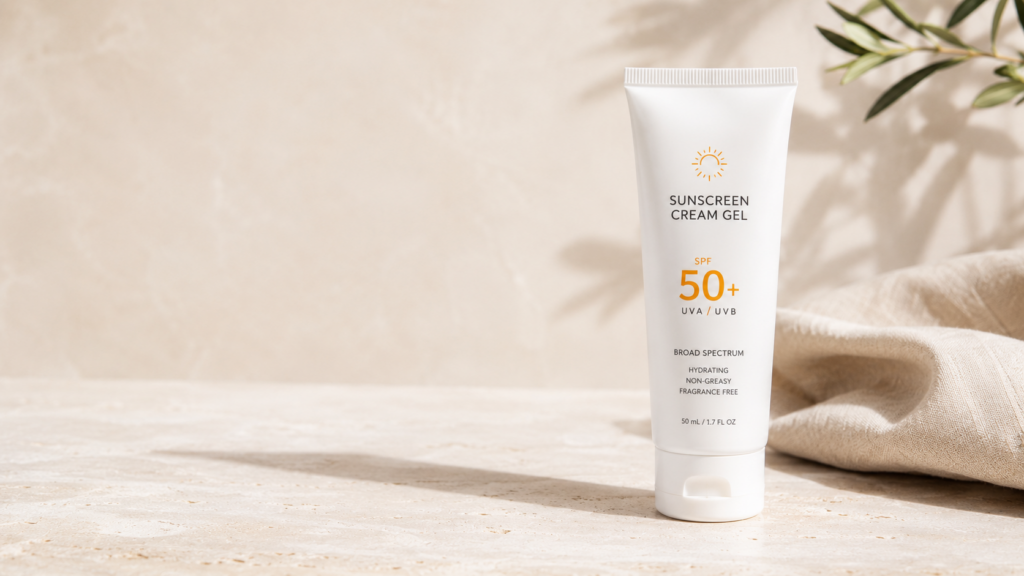
Ready to make daily SPF part of your routine without the white cast? Shop our SPF 50+ Sunscreen Cream Gel, or book a consultation to build a full sun-protection routine for your skin.