


Melasma is one of the most stubborn pigmentation concerns for Nigerian women. Here’s what causes it, common triggers, and treatment options that
This is likely melasma, and it’s one of the most common and most misunderstood pigmentation concerns among Nigerian women. American Academy of Dermatology’s guide to melasma
What Melasma Actually Is
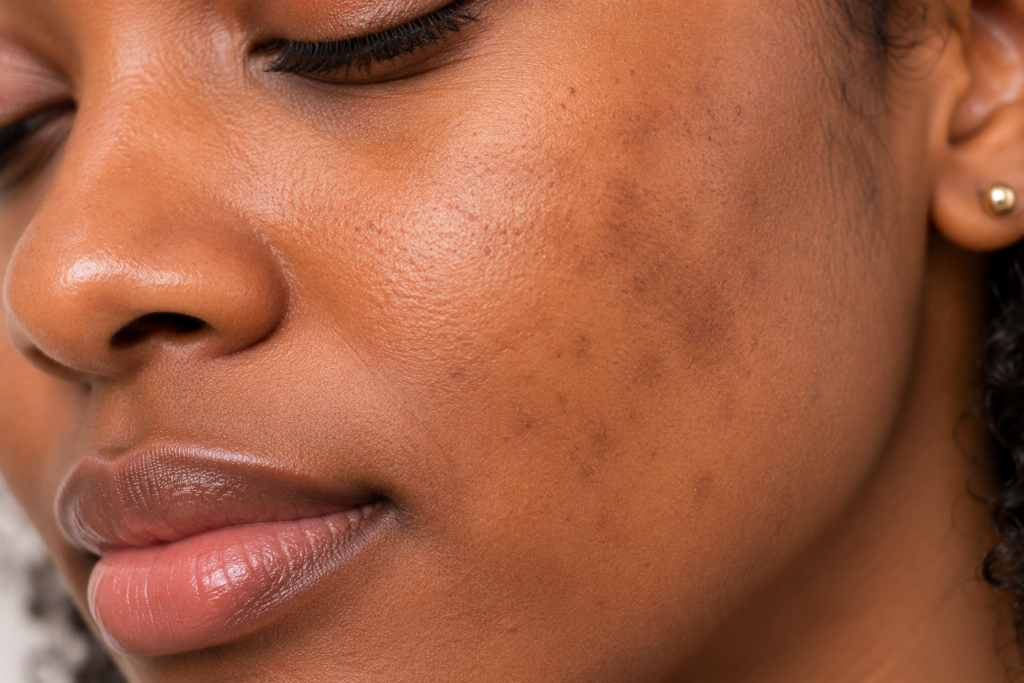
Melasma is a chronic pigmentation condition caused by melanocytes producing excess pigment in response to a combination of triggers, most often hormones and UV exposure together. Unlike post-inflammatory hyperpigmentation (which follows a specific injury like a pimple), melasma tends to appear as larger, symmetrical patches, commonly across the:
- Cheeks and bridge of the nose
- Forehead
- Upper lip
- Jawline
Common Triggers

- Hormonal changes — pregnancy (often called the “mask of pregnancy”), birth control pills, and hormone replacement therapy are among the most common triggers.
- Sun and heat exposure — UV light is the single biggest factor in both triggering melasma and darkening existing patches.
- Genetics — a family history of melasma significantly increases the likelihood.
- Heat-generating treatments or aggressive exfoliation — anything that irritates the skin can worsen existing melasma. In some cases
- In some cases, thyroid conditions are also linked.
Why It’s So Common — and So Stubborn — in Nigerian Skin

Melanin-rich skin has more reactive melanocytes to begin with, and Lagos’s near-constant heat and UV exposure means that trigger is present almost year-round. That combination of reactive pigment cells plus consistent sun exposure is exactly why melasma tends to be both more common and more persistent in Nigerian women compared to lighter skin tones.
Treatment Options
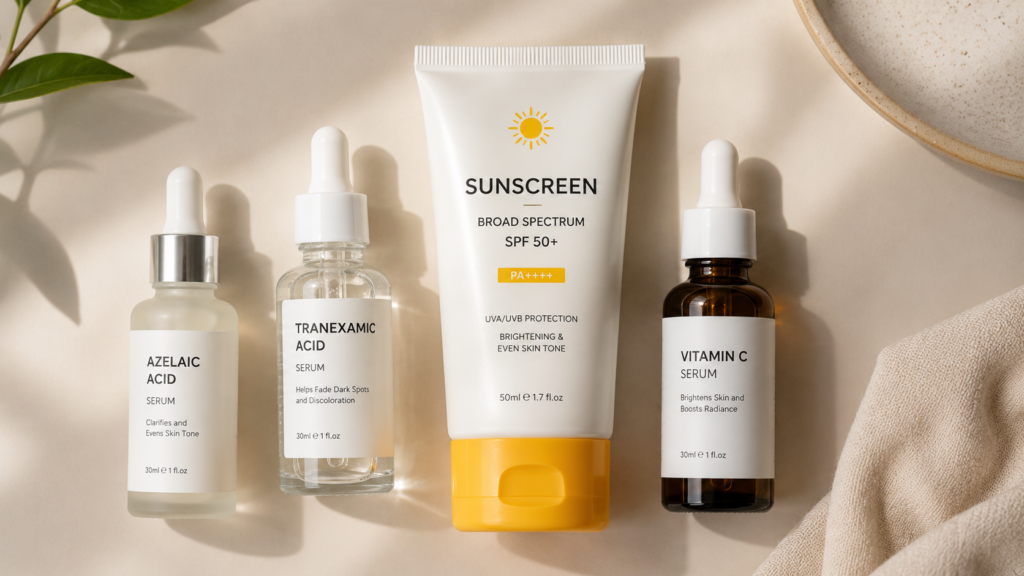
The foundation of every treatment plan is strict, daily broad-spectrum sunscreen. Without consistent SPF, no other treatment will hold; sun exposure re-triggers the pigment production that every other step is trying to calm.
Beyond sunscreen, options include:
- Topical agents such as azelaic acid, tranexamic acid, niacinamide, and vitamin C, which help calm and gradually fade pigment
- In-clinic treatments, including certain chemical peels, used carefully and specifically calibrated for melanin-rich skin
- Avoiding heat-inducing activities during active flare-ups — saunas, hot yoga, and prolonged heat exposure can worsen patches
- A gentle, consistent routine — harsh scrubbing or overly aggressive actives can trigger rebound pigmentation, making melasma worse rather than better
Why Melasma Needs Professional Guidance
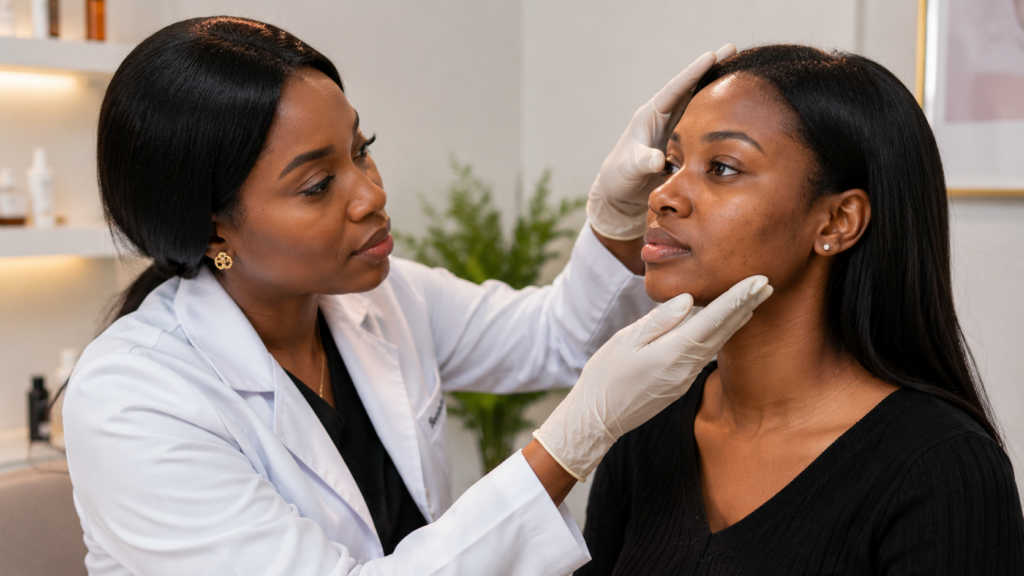
This is one pigmentation concern where self-treating with strong over-the-counter actives or, worse, an aggressive laser treatment not suited to deeper skin tones can actually backfire and worsen the discoloration. Melasma responds best to a carefully sequenced plan built around your specific skin tone and trigger pattern, which is exactly what a proper consultation is for.
Managing Expectations

Melasma is best thought of as a manageable, chronic condition rather than something with a permanent cure. With consistent treatment, patches noticeably fade and become far less visible but sun exposure or hormonal shifts (a new pregnancy, restarting birth control) can bring some pigment back. The goal is long-term management and maintenance, not a one-time fix.
Frequently Asked Questions

- Is melasma the same as regular dark spots from acne? No. Melasma tends to appear as larger, symmetrical patches driven by hormones and sun exposure, while acne marks (PIH) are localized to where a specific breakout occurred.
- Will melasma go away completely after pregnancy? For many women, pregnancy-related melasma fades significantly after childbirth, though it doesn’t always disappear entirely — ongoing sun protection makes a real difference either way.
- Can I use the same brightening products for melasma and acne marks? Some ingredients like niacinamide and vitamin C support both, but melasma often needs a more targeted approach guided by a professional, since some acne treatments can actually aggravate melasma.
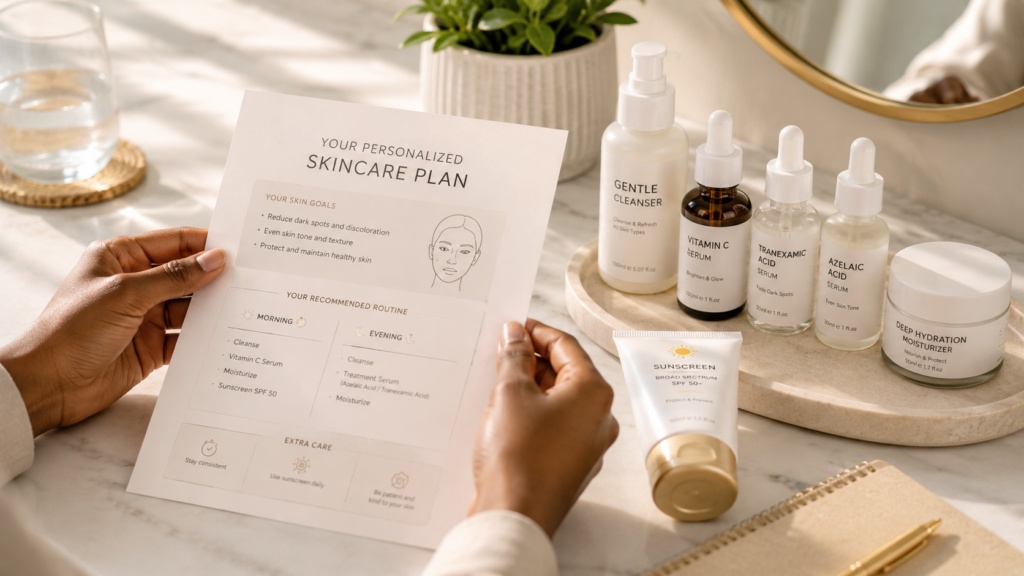
Melasma responds best to a plan built specifically for your skin. Book a consultation with our team to get an accurate assessment and treatment plan.