
You finally get a breakout under control. The redness calms, the bump flattens, and for a moment your skin looks clear. Then, weeks later, you notice it — a flat brown or grey mark sitting exactly where the pimple used to be, refusing to fade.
If this sounds familiar, you’re dealing with one of the most common — and most misunderstood — skin concerns for melanin-rich skin: post-inflammatory hyperpigmentation, or PIH.
What Is PIH, Really?

PIH is not a scar. It’s your skin’s own pigment-producing cells, called melanocytes, reacting to inflammation. Any injury or irritation to the skin — a popped pimple, a razor bump, an insect bite, even aggressive scrubbing — triggers melanocytes to release extra melanin as a kind of protective response.
On lighter skin, this reaction is often barely noticeable. On deeper skin tones, melanocytes tend to be more reactive, so the same injury produces a mark that’s more visible and takes longer to fade. This is a normal biological response — not a sign that your skin is “damaged” or that something is wrong with you.
Why Melanin-Rich Skin Is More Prone to It

It isn’t that Black and brown skin has more melanocytes than lighter skin — it’s that those melanocytes respond more intensely to inflammation. That’s why the same acne breakout that clears without a trace on one skin tone can leave a mark lasting months on another.
Common triggers besides acne include:
- Eczema or dermatitis flare-ups
- Ingrown hairs and razor bumps
- Insect bites
- Waxing or threading irritation
- Overly harsh exfoliation
What Makes Dark Spots Worse
Before getting into treatment, it helps to know what to avoid — because a few everyday habits can turn a mark that would fade in weeks into one that lingers for a year:
- Picking or popping breakouts. This is the single biggest cause of stubborn PIH. Every pop is a fresh injury.
- Skipping sunscreen. UV exposure stimulates even more pigment production, so unprotected marks darken and take far longer to fade.
- Over-exfoliating. Scrubbing harder doesn’t fade marks faster — it creates new inflammation, which creates new pigment.
- Stopping treatment too early. PIH fades gradually, not overnight. Switching products every few weeks resets the clock.
How to Actually Treat PIH
The good news: PIH is very treatable with consistency and the right ingredients.
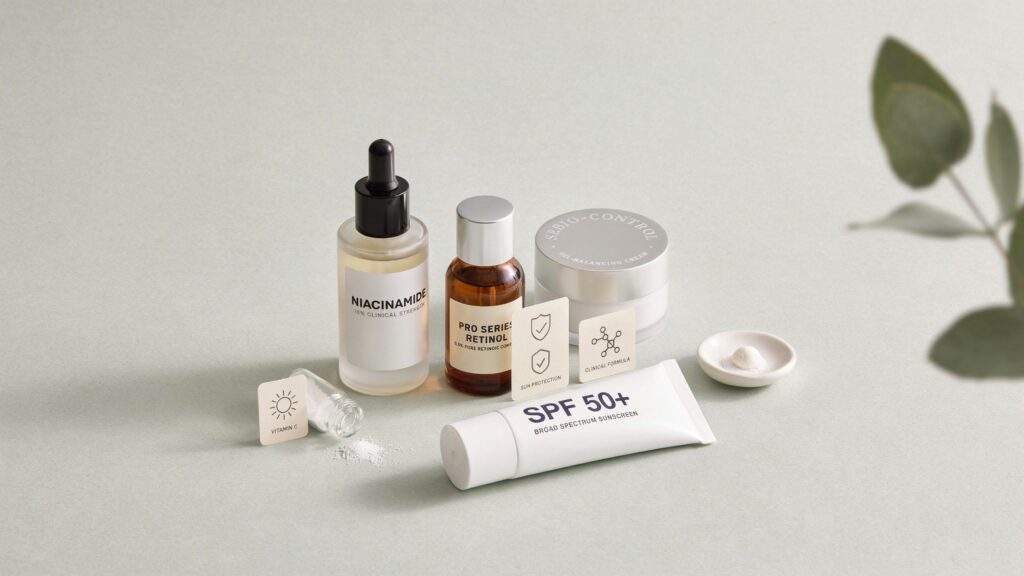
- Niacinamide — slows the transfer of pigment to the skin’s surface and calms underlying inflammation.
- Azelaic acid — gently fades discoloration and is safe even on acne-prone or sensitive skin.
- Vitamin C — an antioxidant that brightens tone and helps block excess pigment production.
- Retinoids — speed up cell turnover so pigmented skin cells shed and reveal fresher skin underneath. Our Pro Series Retinol Serum is formulated with squalane to support this without over-drying the skin.
- Broad-spectrum SPF, daily. This is non-negotiable without it, every other step is working against UV exposure that keeps reactivating pigment. Our SPF 50+ Sunscreen Cream Gel was made specifically to feel lightweight enough for daily wear on melanin-rich skin.
- Treat the acne itself. New breakouts mean new marks, so calming active acne with something like our Sebio-Control Acne Prone Skin Cream is just as important as treating the marks already there.
What’s a Realistic Timeline?
This is where patience matters most. Superficial PIH typically takes 3 to 6 months of consistent care to visibly fade. Deeper marks can take up to a year or longer. Sunscreen use is the single biggest factor in how fast this timeline moves — skipping it can stall progress indefinitely, even with great products.
When to See a Specialist

If a mark is indented rather than flat, or hasn’t improved after 3–4 months of consistent home care, it may be true scarring rather than PIH and it responds better to in-office treatments like chemical peels or microneedling. A one-on-one consultation with our team can help you figure out exactly what you’re dealing with and build a routine around it.
Frequently Asked Questions
Does PIH ever go away completely on its own? Often, yes but it can take many months to over a year without help, and daily sun exposure without SPF can make marks semi-permanent. Active treatment speeds this up considerably.
Is PIH the same as acne scarring? No. PIH is flat discoloration from excess pigment and fades over time. True scarring involves a change in skin texture (indented or raised) and doesn’t resolve without dedicated treatment.
Can I treat active acne and dark spots at the same time? Yes in fact, you should. Treating both together prevents new marks from forming while you fade existing ones.
Ready to build a routine that actually addresses your skin’s dark spots? Book a consultation with our specialists, or explore our acne and pigmentation range.